All Posts By

Wake Robin

Wake Robin takes part in Great Backyard Bird Count

By | Blog

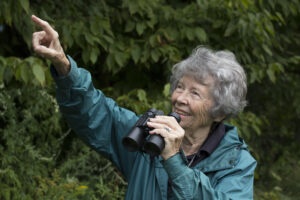
Wake Robin is home to many species of birds and a great number of bird aficionados. Each winter and spring, residents take part in the annual Great Backyard Bird Count, launched in 1998 by the Cornell Lab of Ornithology and the National Audubon Society.

Their eBird site features data gathered by state-of-the-art statistical models and machine learning to build visualizations and tools to better understand migration, abundance patterns, range boundaries, and much more. The eBird Team compiles raw data and high-resolution satellite imagery from NASA, NOAA, and other sources to produce cutting-edge statistical models to predict when, where, and in what numbers species occur every week of the year.

This is very high-tech stuff, but it starts with real people, on the ground, counting and identifying the birds they see in a given timeframe. From Friday, February 13 through Monday the 16th, a group of Wake Robin residents kept their eyes and ears tuned to the avian world. They noted time, place, species, and how many birds they saw. The information is compiled on a document and submitted to eBird. This is the “raw data” that goes into building the statistical models.

The Wake Robin observers submitted 53 checklists logging 21 species with counts of each. They try to make the counts as accurate as possible, but some have to be estimated. How do you count starlings? The most prevalent species were the ones you probably see in your own backyard: European Starling, Dark-Eyed Junco, American Goldfinch, Black-capped Chickadee, three species of woodpecker, and 14 more. Some birds really get around…chickadees showed up on 31 lists.

Resident Ken O. heads up the Great Backyard Bird Count and says: “These sightings represent winter-resident birds on our campus. In May, we do a similar count to record the summer bird population.” We’ll be back in a few months with another scorecard.


Soothing sounds from the CRDL

By | Blog

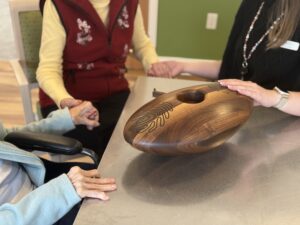
It looks a little like a wooden football, but it makes sweet, soothing sounds and it’s pronounced “cradle.” It’s a beautiful piece of sculpted hardwood with touchpads on the surface and embedded electronics. The central idea is to provide another outlet for non-verbal human connection coupled with music or a soundscape.

The CRDL’s design focuses on helping people with cognitive or physical challenges experience moments of shared meaning through sound and touch. While not exactly a musical instrument, the CRDL transforms human connection into music. When someone places a hand on it, alone or with another person, their touch becomes part of the circuit and the CRDL responds instantly with soft, beautiful sounds. It is pre-programmed with 15 sound-stories such as Nature, Atlantis, and Sitar, and new sound-stories can be created.

A CRDL moment starts when two users each place a hand on the conductive pads and then form a circuit at the moment they touch each other. The device recognizes the manner and intensity of touch and translates this into different sounds. However, it is the user that creates the possibilities. How a person chooses to approach and touch another can convey different meanings and intentions. It can be used one-on-one or in a large group session.

The CRDL is a new addition to the amenities Wake Robin offers to its residents. According to Emily Elderton, Recreation Service Manager, “residents engage longer, maintain eye contact, and seem genuinely delighted as the instrument responds to them. There is no pressure to perform, just moments of curiosity and control.”

Without seeing this magical interface of human and machine, it’s hard to fathom how it can break through isolation and create a form of equality whereby each participant has the same opportunity to engage – but it does! This is about the basic need to connect.

The fact that we have a CRDL at Wake Robin is due to the foresight and generosity of a former resident who left a bequest “to support the arts and recreation for the benefit of the residents of Wake Robin.” That is the legacy of the estate fund established by Patrick Kennedy. A heartfelt connection, from one human to another.

Giving at Wake Robin

By | Blog

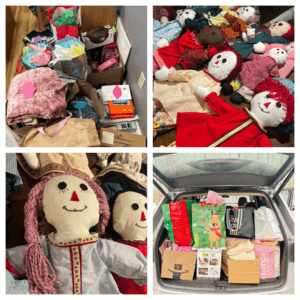
An important value to Wake Robin residents and staff is giving back. All year round, Wake Robin residents partner closely with local food shelves to donate clothing, food, and personal items. Donation baskets are spread throughout the Wake Robin Community Center and distributed monthly. These baskets are often labeled with a theme for the month, which is what the food shelf is most in need of during that time.

Wake Robin residents also donate clothing and household items through Shalom Shuk, a thrift shop that serves the local community, helps new immigrants, and those in need.

For this holiday season, residents partnered with a local food shelf to create dolls to gift to families. These dolls were created by residents which include everything from their yarn hair to their colorful clothing. Hopefully, their new families will love them just as much as the residents enjoyed making them.

Wake Robin also organized a Support-a-Family initiative, where staff members could pick an ornament off a tree listing specific gift requests. This tree included gift-giving opportunities for a Shelburne family, the Shelburne New American community and Wake Robin employees.

Volunteering, donation collection, and advocacy, not just for those who live and work at Wake Robin, but for those in the greater community, have been valued from Wake Robin’s beginnings and will continue for years to come.

Dr. Steven Hamburg presents 2025 Gentry Lecture

By | Blog

There are many annual events at Wake Robin and one of our favorites is the Gentry Lecture.

This series is named after Stokes and Mary Jane Gentry for their contributions as founders, board members, and residents of Wake Robin. The program was established in 2002 and has brought prominent figures from the government and economic sectors, as well as the fields of science, education, and the arts.

This year’s offering came in mid-October and our guest presenter was Dr. Steven Hamburg, Chief Scientist Emeritus of the Environmental Defense Fund. He is recognized around the world as an expert on climate and energy systems. His presentation, “Cutting Methane, Cooling the Planet,” is an exploration of one of the most effective strategies for slowing global warming. Methane is a potent greenhouse gas and reducing emissions offers one of the fastest ways to cool our planet.

Steven’s connection to Wake Robin is through Tom Siccama, a former resident, who was one of his professors at Yale. Climate issues are wide-ranging and happen on many fronts. Changes are happening faster than expected. He says methane is a relatively easy target since we already know how to mitigate its effects. It is the cause of 30% of our warming, and it is emitted in the process of making fossil fuels. The main problem is that methane leaks during the extraction process.

For over a decade, scientists gathered data in partnership with the United Nations. The data showed that there was no denying that there was a problem. They needed solutions and they wanted to have impact. Dozens of companies signed on to help figure out how much leakage was occurring and where it was coming from. They collected information from observers on the ground, from aircraft, and from a satellite. Among the solutions are plugging leaks and capturing vented gases, making dietary changes for livestock to reduce methane production in their digestive systems, and diverting organic waste from landfills. None of these are especially high-tech or expensive.

As Steven told the crowd, “It just takes the will to do something. With the support of the people, we have the power to make a difference.”

Vaccination Season

By | Blog

The national news occasionally carries conflicting reports on the effectiveness of vaccines. We want to make it clear that Wake Robin believes in science and this is how we handle vaccination season on our campus.

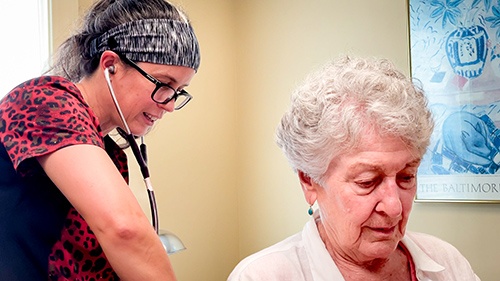
Angela Kiefer is Wake Robin’s Infection Control Nurse. Vaccination clinics are part of her world and a frontline tool for protecting our residents and staff. We sat down with Angela recently for a question and answer interview.

Question: “What is the purpose of a vaccination?”

Angela: “Although vaccinations do not stop you from getting the illness, they help to make the symptoms less severe.”

Q: “A vaccinated person is likely to be less sick?”

Angela: “Yes, it’s proven with the flu vaccine, and it’s been proven with the Covid vaccine. We still had a number of people who were sick last year.”

Q: “Had they been vaccinated before?”

Angela: “Yes. That’s the point of getting the boosters each year. Keep up with it.”

Q: “Some people are reluctant because they have a reaction to the shot.”

Angela: “You are actually supposed to have some sort of reaction. It’s your body’s way of figuring out how to make the antibodies to fight off the actual virus. It’s your immune system educating itself.”

Q: “The flu vaccine is reformulated each year to anticipate new strains. Is the Covid vaccine similar?”

Angela: “It’s the same premise. We are seeing different symptoms with Covid now than we did in the beginning. You’re not losing your sense of taste, and we don’t see fever right now.”

Q: “Has our awareness about that changed too?”

Angela: “In just a few short years, we’ve changed our mindset. We evolve just as the viruses evolve. We still have to protect people and vaccinations are a huge way to do that.”

Q: “How much of our Wake Robin policy is driven by our own standards and how much comes from the state and federal governments?”

Angela: “We always go to the Vermont Department of Health and the CDC for their recommendations. We make adjustments for our community knowing what works best for the people of Wake Robin. We have specific protocols for masking, quarantine time, and levels of PPE (Personal Protection Equipment). We try to figure out what’s best for the residents because that’s top priority.”

The flu season typically runs through the winter months and into early spring. October and November are optimum months for getting your annual vaccine to protect yourself and those around you. Angela encourages you to get the Covid booster as well!

The Art Hop Returns

By | Blog

Five years ago, when the world was locked down by the Covid pandemic, people became a little antsy as the summer wore on. Resident Diane T. had an idea, and she brought it to the CEO for approval.

She felt there were certain talents and interests lurking among the residents and staff and she wanted to showcase them. Her thought was to create events that could be done safely outside. After getting the green light, Diane began to develop a couple of activities and asked a few others for their input.

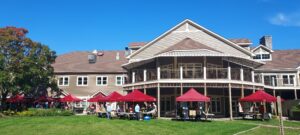
They launched the inaugural Art Hop in 2020, followed by a Garden Tour in 2021, and the second Art Hop in 2022. After a brief hiatus, the Art Hop is back. It is still held outdoors on the back lawn behind the art studio and The Birches dining room.

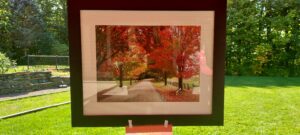
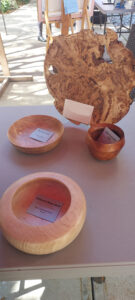
This year’s art show featured the work of 43 residents and staff members, and it wasn’t just paint on canvas. We had mixed-media artists, others who worked in fiber arts, and some pieces that were made of wood. A group of 20 residents took on the task of set-up and take-down and did what they could to appease the weather gods to hold off the rain. It all worked out spectacularly this year.

While the residents planned and ran the show, they were supported by Wake Robin’s Environmental Services team who did the literal heavy lifting to prepare the space and set up tables and chairs. We are looking forward to future art displays created by the many talented residents and staff at Wake Robin.


A Recipe for Success: How Person-Centered Dining Brings New Life to Senior Living

By | News

By Paige Cerulli | iAdvance Senior Care | Published August 25, 2025 | Article Link

For some senior living residents, the ability to have a cup of coffee before their morning cereal makes all the difference. For others, it’s having their favorite cookies after lunch. Some prefer their salads with minimal dressing, and some simply want to be able to dine at times that make sense for their preferences and schedules.

In the past, dining in senior care communities has been somewhat institutionalized, with residents being served standardized meals on trays. It was a process that didn’t leave much room for the individual, and it was a far cry from the experience of dining in a restaurant or at home.

But person-centered dining changes that. And the best part? Even small, simple changes can quickly make the dining experience more enjoyable for residents.

How a Person-Centered Approach Improves Resident Experience

Person-centered dining prioritizes individual residents and transitions away from a one-size-fits-all approach. Kate Hays, director of dining services at Wake Robin, considers choice, flexibility, and supporting autonomy and dignity to be key elements of person-centered dining.

“I think person-centered dining has always been a cornerstone of hospitality,” she says. “Knowing customers’ names and preferences, including food and where they like to sit, has always made customers feel special and welcome.” Hays points out that in senior communities, residents often stay for years — even a decade or more — which makes it easier to build meaningful relationships and deliver a naturally person-centered approach.

“In hospitality we always want to get to yes, but in a community of 400 plus residents who each have deep, meaningful relationships to food and food memories, how do we say yes to every resident preference without breaking the system?” says Hays. “We pivot and do a lot of bending, but no breaking.”

Dr. Carol McKinley, Simpson president and CEO, says the traditional style of dining where residents were given a tray with a main course, fruit or salad, three beverages, and silverware is a very institutionalized model that doesn’t fit the senior care environment. “This is a person’s home, so the whole thought process around person-centered dining is to bring a different experience that is more homelike,” she explains. To create this homelike experience, communities like Simpson have removed trays completely, focusing more on what meal presentation looks like. This approach also ensures all residents at a table receive their meals at the same time, restaurant-style, so they can enjoy them together.

Person-centered dining involves getting to know residents’ preferences and honoring their dignity at every meal. “If you have someone who requires special utensils, be sensitive about providing those utensils so they don’t feel out of place,” she says. For example, some communities now use clothing protectors instead of bibs. “[Person-centered dining] is really about how we help people have this great experience around eating, helping to dignify that experience, and helping it feel like home.”

According to Greg Blumenthal, district manager, Sodexo Seniors, Simpson has deliberately created each dining room to mirror a family environment, seating about 12 people. “The residents know each other, and the folks that work to help you dine and have a great meal really get to know you,” he says. The small, intimate approach allows servers to better understand residents’ preferences and provide the best meal and dining experience possible. By remembering residents’ favorite dishes, staff can set aside meals for those who weren’t present at the time. These thoughtful touches can have a significant impact.

Simpson has also brought the kitchen into the dining spaces, allowing residents to watch their meals being prepared in real time. “It’s really fresh, and if there’s any finessing to make meals the way you like them, we do it right there,” he says.

These preparation methods not only stimulate appetite but also spark engagement. The aromas can encourage eating for residents struggling with weight, while the visual experience of cooking often inspires conversation among those passionate about food.

This person-centered approach empowers employees to take initiative and create meaningful connections with residents. “I was at a Simpson community and we had a resident who spilled something on themselves,” says Racheal Palumbo, area general manager, Sodexo Senior Services at Simpson Community Services. “A maintenance employee jumped into action, knew the resident by name. It’s more than just dining; everybody gets involved in the dining experience.”

There are clear advantages to a person-centered dining approach, most notably greater resident satisfaction. As Hays points out, food quality is often a deciding factor for prospective residents considering a community, making this approach essential. Just as importantly, it enriches the daily experience for those who already call the community home. “Residents who are satisfied with the dining offer will benefit not only nutritionally but also through greater socialization and engagement with other residents and the community,” explains Hays.

The Vibrant Minds Program: Enriching Person-Centered Dining Experiences

In June 2025, Simpson implemented the Vibrant Minds program, becoming one of the first communities to pilot the initiative. “Healthy eating comes in a lot of different forms,” says Blumenthal. “We identified a huge need for a neuroprotective diet for everyone, regardless of your age.”

The program features over 750 recipes that meet the criteria for a neuroprotective diet, a proactive way to eat healthy for brain health. It encompasses a robust library of recipes, training to help teams understand what individuals with cognitive issues might be experiencing, and more.

The program also addresses residents’ needs and concerns. Many want to know how they can maintain their well-being, and some worry about the possibility of cognitive decline. “[The Vibrant Minds program] speaks to what our residents are asking for, but it’s not just one of these self-help book kind of things,” says McKinley. “It works so hand in hand with our philosophies around person-directed dining. We’re adding another layer to how we can support [residents] but also continue to provide things that will support brain health.”

How to Bring Person-Centered Dining to Life in Your Community

Shifting to a person-centered dining approach can feel overwhelming at first, so McKinley suggests starting with small, simple changes to make the transition easier. She points out that numerous resources are available on the topic, giving communities the option to research person-centered dining on their own if hiring outside support isn’t feasible.

“Know thy resident,” says McKinley. “You can’t do any of this unless you know your resident and what their preferences are.” Simpson gathers information about residents, including their food preferences, during a holistic assessment when residents first move in. Staff members continue these conversations regularly, recognizing that residents’ preferences may evolve over time.

Hays encourages communities to hold focus groups with residents and develop strategies to put their ideas into action. “Wake Robin residents suggested a boutique condiment center and individually customized grain bowl entrée options, and we worked together to make those suggestions happen,” she says. She also meets with individual residents to discuss how to best meet their dietary or cultural restrictions.

“Make food choices inclusive,” says Hays. “If you need an ‘always available’ menu of plain chicken, fish, and tofu for low sodium residents, let others know that they can use a sauce off another menu option to expand their daily entrée menu option by customizing the ‘always available’ plain menu items.”

Meeting residents’ preferences doesn’t have to be complicated. “Keep it simple,” says Palumbo, explaining that simple things, like having coffee available when residents want it, can make a big difference. “A lot of times, we forget that when we’re caring for someone in an institutional type of place,” she explains. “Really take it back to basics and what matters.”

“[Person-centered dining] lets residents know that we see you,” Blumenthal says. By incorporating residents’ preferences into the menu, communities often find that many others enjoy those items as well. They can also identify and remove dishes that go uneaten. “It’s not an extra cost. It’s the empowerment to be able to pivot,” he says.

“I think sometimes people are fearful of taking these steps because they’re fearful of being asked for something they can’t do,” says McKinley. There is a common fear that offering more options will drive up costs, but in reality, good meal service combined with strong engagement leads to happier residents and fewer complaints. “It doesn’t have to be feared because you can start very simplistically,” she says. “It will make your lives easier.”
Wake Robin’s New Landscaping Workforce

By | Blog

Job description: Skilled practitioners needed for on-site work. Shifts are round-the-clock with no days off. Must be team player, willing to work closely with groups of colleagues, and sure-footed. Food allowance on site – all you can eat.

You might think it would be hard to fill positions like this, but it’s a dream job for the herd of goats munching their way through the vegetation on Wake Robin’s hillsides. Residents and staff regularly stop to watch this team of 53 eating machines ply their trade. They are tasked with poison ivy abatement (treat food!) and anything else that lies in their path. While they roam the steep hillsides, their world is one huge salad bar.

Our new workforce is contained by an electric fence with occasional assistance from Frankie, the border collie who moves the herd to the next

location. Each one wears a GPS tracker and sets their own “to do” list which is more of a “to eat” list. The goats eat, compost, and aerate the ground as they go. Our human Grounds crew scatter wildflower seeds in the work zone taking advantage of all those sharp little hooves pushing seeds into the earth (safe from bird browsing) and cracking the hulls, improving germination.

Another benefit to this operation is that it costs half the price of using human-controlled lawn equipment and reduces the erosion caused by large machines on hillsides.

There are several rent-a-goat operations in Vermont, and we were lucky enough to get a small herd of very mellow, very friendly herbivores, all too happy to land a gig in Shelburne. This farm is Cloud Brook Grazing out of Barnet. Whether you call it targeted grazing or goatscaping, it’s sustainable, it’s green, and really fun to watch!


Award-Winning Nurses of Wake Robin

By | Blog

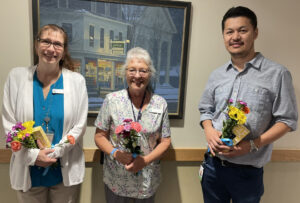
From left to right: Jen Powell , Cindy Yarnell, and Tenzin Tsephal.

We are extremely proud and pleased to announce that three Wake Robin nurses were recently recognized by The Vermont Health Care Association for their outstanding achievements in medical care. These awards are given to people working in long-term care communities who have displayed the highest levels of dedication and excellence.

There is the clinical side to nursing: being a good technician, following protocols, and solving problems. Each one of our award winners was cited for their experience, but even more so for the compassion, grace, and commitment they bring to the residents of our Linden Health Center.

Cindy Yarnell is the winner of this year’s Licensed Nurse Aid of the Year award. Besides the award, she has something of a longevity record, having served the residents of Wake Robin for 26 years. She is a topflight caregiver, mentor, and advocate. Heather Filonow, Director of Health and Resident Services, says: “What sets Cindy apart is her remarkable connection with our residents. She possesses an incredible memory for their unique likes, dislikes, care plans, preferences, and personalities. This insight allows her to deliver personalized care that enhances each resident’s well-being. She is a trusted presence and an invaluable resource.”

The award for MDS/Quality Assurance Nurse of the Year went to Jen Powell who only recently came to Wake Robin but has 30 years of experience in long-term care. MDS is the process by which nurses such as Jen conduct assessments, analyze data, and identify trends to come up with a customized plan for each person under their care. Heather comments: “She brings compassion and warmth to every interaction creating an atmosphere of comfort and trust for both staff and residents. Her clinical skill and insight are exceptional, but it’s her human touch that leaves a lasting impression.”

Working the overnight shift, providing supervision of staff as well as direct care, Tenzin Tsephal is this year’s Registered Nurse of the Year. He has been an integral part of the care team marked by his humility, grace, and compassion. Heather points out that: “Family members especially speak to the profound comfort and compassion Tenzin has provided during end-of-life care, when his presence becomes a source of strength and solace.” He is a true role model in long-term care.

Marked by heartfelt dedication to quality care, exceptional leadership, and unwavering professionalism, these three award-winning nurses are part of a much deeper care team at Wake Robin. Congratulations to all!

Croissants, the Statue of Liberty, a Boxcar Filled with Gifts… Things We Got From France

By | Blog

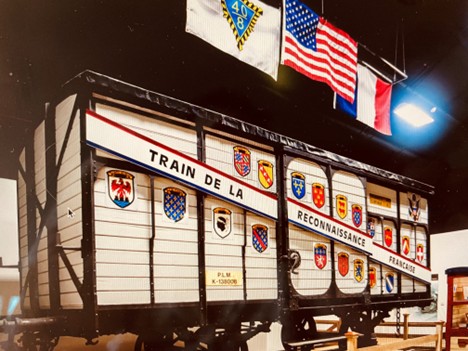
Many wonderful things have come to the U.S. over the years courtesy of France. A rather unique gift arrived at New York Harbor on February 3, 1949, when the freighter Magellan unloaded 49 antique boxcars, one of them destined for Vermont. Each boxcar was filled with remarkable gifts from the people of France as a way of saying “thank you” for the help we provided during and after WWII.

Earlier this month, the Wake Robin community was treated to a presentation by Brigitte Kibler Helzer who told the story of the journey of the Gratitude Train, or the Merci Train as it is usually called now, and how the Vermont boxcar ultimately survived. Brigitte was born in Alsace while it was under Nazi occupation. Her family’s emigration to the United States coincided with the shipment of the Merci Train to New York, and this amazing parallel is part of her life story.

The Merci Train was a heartfelt gesture from the citizens of France who donated thousands of gifts and filled 49 boxcars, one for each state (Alaska was not with us yet). The train was a response to the Friendship Train, which had delivered relief supplies from the U.S. to war-torn Europe in 1947.

Many of these train cars are still on display today as a reminder of this powerful act of international goodwill. The boxcars themselves had been used in both world wars and were themselves a type of survivor. The Merci Train was met with great fanfare upon its arrival in New York including a U.S. Air Force flyover and fireboat salutes.

So what happened to Vermont’s gift? When it first arrived in Brattleboro on February 10, 1949, it was welcomed with a ceremony before traveling to Montpelier, where gifts were displayed at the Vermont Historical Society Museum. The boxcar contained a variety of gifts including paintings, photographs, dolls in period costumes, commemorative medals, books, clothing, wind-up toy Renault cars, and even live trees. Many of these items were later distributed to towns, libraries, and museums throughout Vermont.

Today, the Vermont Merci Train boxcar is located at the Vermont National Guard Library & Museum in Colchester. All these years later, it is still appropriate to say, “merci beaucoup!”