All Posts By

Wake Robin

Croissants, the Statue of Liberty, a Boxcar Filled with Gifts… Things We Got From France

By | Blog

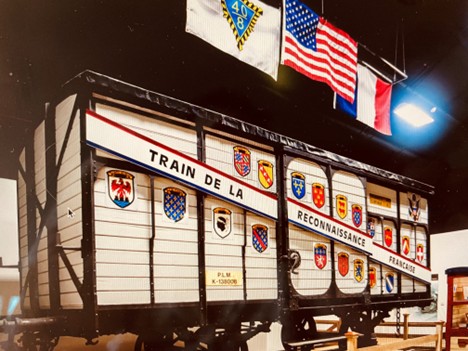
Many wonderful things have come to the U.S. over the years courtesy of France. A rather unique gift arrived at New York Harbor on February 3, 1949, when the freighter Magellan unloaded 49 antique boxcars, one of them destined for Vermont. Each boxcar was filled with remarkable gifts from the people of France as a way of saying “thank you” for the help we provided during and after WWII.

Earlier this month, the Wake Robin community was treated to a presentation by Brigitte Kibler Helzer who told the story of the journey of the Gratitude Train, or the Merci Train as it is usually called now, and how the Vermont boxcar ultimately survived. Brigitte was born in Alsace while it was under Nazi occupation. Her family’s emigration to the United States coincided with the shipment of the Merci Train to New York, and this amazing parallel is part of her life story.

The Merci Train was a heartfelt gesture from the citizens of France who donated thousands of gifts and filled 49 boxcars, one for each state (Alaska was not with us yet). The train was a response to the Friendship Train, which had delivered relief supplies from the U.S. to war-torn Europe in 1947.

Many of these train cars are still on display today as a reminder of this powerful act of international goodwill. The boxcars themselves had been used in both world wars and were themselves a type of survivor. The Merci Train was met with great fanfare upon its arrival in New York including a U.S. Air Force flyover and fireboat salutes.

So what happened to Vermont’s gift? When it first arrived in Brattleboro on February 10, 1949, it was welcomed with a ceremony before traveling to Montpelier, where gifts were displayed at the Vermont Historical Society Museum. The boxcar contained a variety of gifts including paintings, photographs, dolls in period costumes, commemorative medals, books, clothing, wind-up toy Renault cars, and even live trees. Many of these items were later distributed to towns, libraries, and museums throughout Vermont.

Today, the Vermont Merci Train boxcar is located at the Vermont National Guard Library & Museum in Colchester. All these years later, it is still appropriate to say, “merci beaucoup!”

Keeping our planet SSAFE

By | Blog

Wake Robin is a member of SSAFE (Senior Stewards Acting for the Environment). We are one of 17 chapters nationwide. The organization empowers seniors to lead climate action in their communities, and advance clean energy, sustainability, and environmental stewardship.

What does that connection mean? Wake Robin residents have opportunities to learn ways to become more environmentally sustainable through SSAFE zoom presentations, online meetings, and a multitude of resources on the SSAFE website (SSAFE.org). Wake Robin residents share their outstanding environmental efforts with others by these same means. In June, we had a presentation from the Vice President of Operations and Development at RoseVilla, a Life Plan Community in Portland, Oregon. He described their forward-looking work on resilient campus planning and then provided a helpful question and answer session. He highlighted sustainability efforts and preparations to withstand large-scale environmental emergencies, sharing thought-provoking approaches. RoseVilla was founded in 1960 so Wake Robin certainly benefits from hearing from a community very similar to ours, with many common interests, and 30 years more experience.

The following week, our Dining Director, Kate Hayes, as part of a 5-member zoom panel of SSAFE dining directors, shared information with a wide audience about Wake Robin’s approaches to eating sustainably. Topics included plant-based availability, local vendors, gardens, challenges, what is and isn’t working, and opportunities.

Of note, a follow-up SSAFE working group highlighted the value of adopting many of Wake Robin’s approaches at other campuses. The connection with SSAFE, a non-profit nationwide organization, is in line with Wake Robin’s goal, “We will grow and harness brand distinction as a resident-driven community with a deep appreciation of our environment and a lifestyle that embraces aging.”


It’s Graduation Season

By | Blog

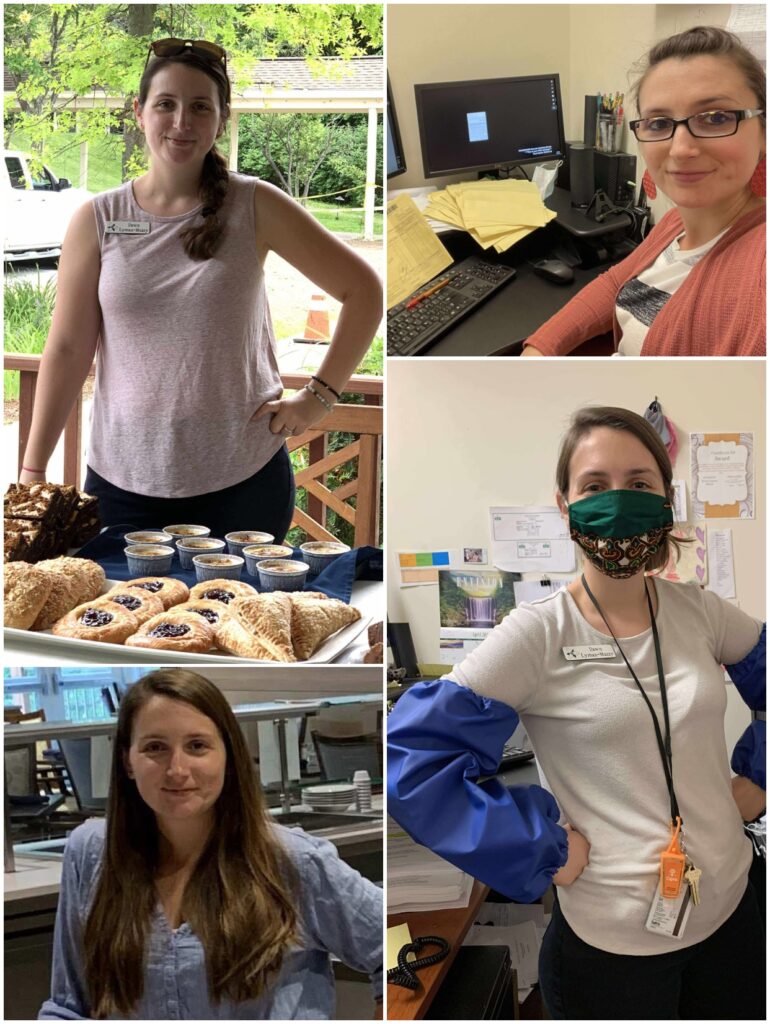
Dawn Duell in her previous roles at Wake Robin

As spring edges toward summer, we are in graduation season. We want to share a story of one of our own who liked to graduate so much, she did it several times!

Dawn Duell came to Wake Robin fresh out of high school. That was one graduation. She joined us in Dining Services and had a number of different responsibilities over five years. She intended to be part of our next training program for Licensed Nursing Assistants or LNA, but the start date was delayed. She took a brief break to start a family and came back to us in 2015 in the role of Dining Operations Coordinator.  According to Dawn, “I loved my position but my passion and love for nursing never went away.”

She researched what was required to get into a nurse education program and took online classes to take the prerequisite courses. Dawn learned Wake Robin had partnered with the State of Vermont for the Long-Term Care (LTC) Cohort Program, and she was eligible as a Wake Robin employee to be part of it. She won multiple grants and a Wake Robin scholarship to cover her training and then immersed herself in the pursuit of her goal.

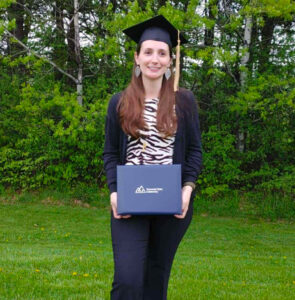
Working a full-time day job, followed by evening classes and weekend clinical practicums, plus drive time to and from Randolph, Dawn flourished in the learning of her new career. She came back to Wake Robin as an LNA in our Linden Health Center to get some hands-on experience and also earned her Certified Practical Nurse designation. Another graduation. Shortly after, she became a Licensed Practical Nurse while still working here. Dawn continued her classes, earning the associate’s degree in nursing, generally recognized as Registered Nurse. On May 17 of this year, she was honored at one more graduation in recognition of this milestone.

Dawn says, “I absolutely would not have been able to accomplish this career without the support from the Wake Robin residents. The scholarship fund they contribute to has made a significant impact in my story.” An amazing personal drive led Dawn to a career she had dreamed about, and the support of the Wake Robin community helped her achieve it. Congratulations to our recent graduate!

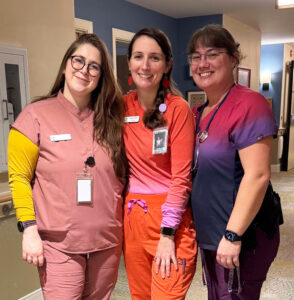
Dawn with her coworkers at Wake Robin

Variety is the spice of…you know how that goes

By | Blog

Residents join together for the weekly Cup of Conversation


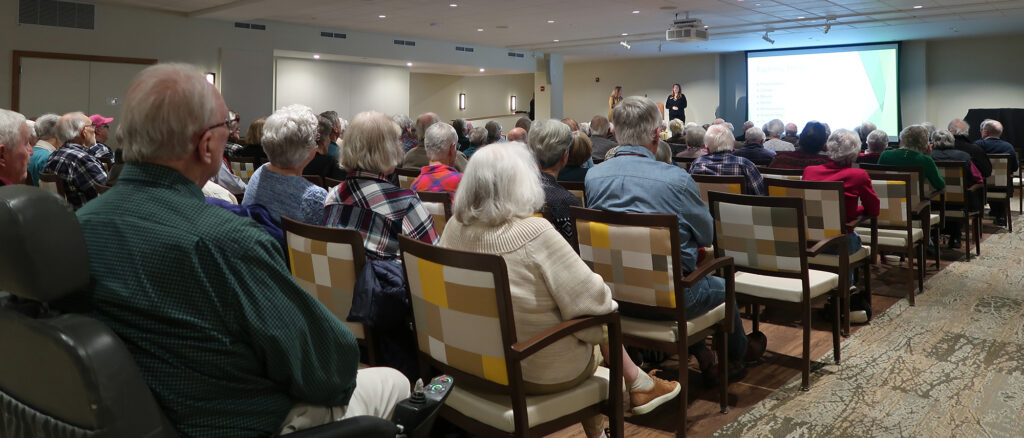
You have probably heard of the town-hall style meeting we have each week called Cup of Conversation. Its origin goes back to the beginning of Wake Robin while still under construction, as a means to keep everyone apprised of progress, changes, and updates.

These days, Cup is a forum for the exchange of information, and it is all over the map. We draw about 150 people as the live audience in our Meeting Room and more can join via the livestream camera. Meagan Buckley, CEO/President, presides at the podium with many guests over the course of the one-hour meeting. We get reports from various departments as well as announcements from committees and individual residents. After the meeting, we produce an electronic record known as “Written Cup” that serves as a summary of all that transpired. It’s fascinating to see the variety of issues addressed in one session.

At one recent Cup, details from a number of different sources were shared:

  • The annual Pancake Breakfast for staff and residents celebrating the wonderful end result of the maple syrup production season.
  • The schedule of maintenance from Environmental Services to service and repair heating and cooling systems in each home. There are 250 homes here.
  • Announcement of the first session of the Russian Literature class.
  • Part 3 of the Lake Champlain Maritime Museum Archaeology Series- Underwater Archaeology of Commerce: Steamboat and Canal Boat Wrecks of Lake Champlain.
  • Scam of the Week identified by a resident who suspected something wasn’t right about the guy on the phone claiming to be from a prominent bank. The resident did not get fooled and reported the incident to the Vermont Attorney General’s office.
  • Sign up for Green Up Day (statewide effort in Vermont to clean up roadside trash).
  • An upcoming presentation from the Racial Justice Committee focusing on race and our criminal justice system. The speakers were two professors emerita from UVM.


From pancakes to racial justice…you never know where the next Cup will take you.

Kick off the Summer at the Wake Robin Tag Sale!

By | Blog

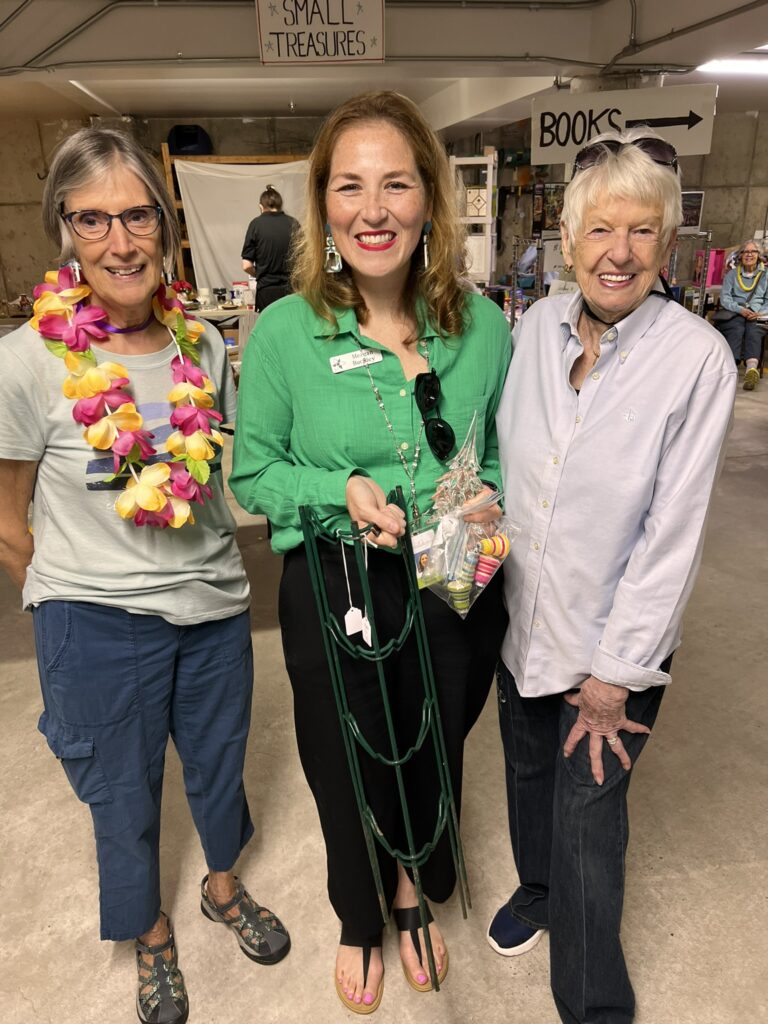
Wake Robin President & CEO, Meagan Buckley at the Tag Sale with Resident volunteers.


Saturday, June 7, 9:00 AM. You will want to put that on your calendar, so you don’t miss the next Wake Robin Tag Sale. This popular activity has happened every year since 1995 with only a two-year hiatus due to the pandemic. It’s the biggest event run by the Wake Robin Residents Association, and it feeds the activity budget for the year.

The Tag Sale is planned out over a whole year with seven collection dates to amass the treasures. This is Reduce, Reuse, Recycle to the nth degree. Over 40 volunteers take part in sorting the merchandise, and there are teams of Gleaners and Wranglers to select and move the items. There are 17 leadership positions, team leaders, and even designated cookie-bakers! It’s a well-oiled machine that spreads out over the one third acre site, the Hornbeam garage.

All Hornbeam residents know that they will have to park elsewhere for about a week in preparation for the sale. The floor gets power-washed, and all the merchandise is laid out in 19 departments…furniture, gardening, books, lamps, art, kitchenware, and much more.

On that Saturday morning, shoppers will begin lining up before 7:00 for the 9:00 start. It only runs until 3:00 so get ready for some competitive shopping! We had roughly 1,250 customers last year, and the lucky ones are offered a fresh-baked cookie while in the checkout line. Over half of the items will be sold and the remainder will be given to local charities. It’s a clean finish to a huge undertaking.

A special treat this year for the stars of our Tag Sale (all the residents) will be the screening of a documentary shot at last year’s event. The title? Tag Sale!

5 Creative Ways Retirees Are Making Money From Their Hobbies

By | News

By Lucy Lazarony | Investopedia | Published March 13, 2025 | Article Link

Retirees are finding savvy ways to make money from the hobbies they love.

“Turning that hobby or creative venture into something exciting and meaningful financially has so many benefits, from shoring up retirement savings to increasing quality of life to staving off dementia,” says Patrick McAndrew, founder of American Wealth Planner.

Key Takeaways

  • Retirees can turn their hobbies into money-making ventures.
  • Starting a blog about your hobby and selling items you no longer use are two ways to make cash.
  • Don’t be shy about promoting and selling your artwork if you’re an artist.
  • Rent out what you no longer use such as a recreational vehicle, swimming pool, or yard.
  • Sell your photography or the produce from your garden.

Getting Profitable With Puzzles

Missy Walker of Winter Garden, Florida is passionate about puzzles. “I love jigsaw puzzles. I solve puzzles at home. I play in puzzle competitions. And I’ve always loved puzzling fast,” Walker says. “As a retired educator, it’s a great stress relief for me and I love the challenge.”

Walker started a blog and began selling used puzzles on Facebook Marketplace to make some money from her hobby. “I started my blog, Speed Puzzling Tips. Just hit the first anniversary last week and we have over 4K viewers a month,” Walker says. “I write all the content myself and I keep it real because I play jigsaw puzzles.”

Selling Artwork

Jan Lawson, 83, began creating art at age 60. She works in acrylics, creating both paintings and collages. She shows and sells her art in coffeehouses, community centers, and art galleries. Lawson has an apartment at Wake Robin, a retirement community in Shelburne, Vermont, and she also hangs a piece of art outside her front door. “It’s kind of fun to keep changing it,” Lawson says.

People notice the art and want to buy it. “Sometimes I sell it to them. Sometimes I give it to them,” Lawson says. “That’s fun to do.”

Renting Out RVs, Pools, and Yards

Retirees are finding ways to make money off vehicles and other items they’re not using. They rent out for cash what they once used for their hobbies.

Important
Retirees are renting out their RVs on Outdoorsy.com, their pools on Swimply, and their yards on Sniffspot, according to McAndrew.


“Myrna and Bill Landers lived on their acreage for over 25 years before deciding to list their pastures as off-leash dog parks on Sniffspot. Not only have they earned meaningful income but they also say that sharing their land and their art with people and pups alike is a joy,” McAndrew says.

Selling Photography

If you’re a retiree who enjoys taking photos, the next step is selling them.

“If you like to take photos, why not turn them into cash by selling them as stock photos?” asks Mark Slack, finance expert at SideHustles.com. “Shutterstock, Adobe Stock, and Alamy will take the photos and license them to people, paying you each time they’re downloaded. The most popular categories, including business, travel, and lifestyle photography, tend to sell really well.”

Selling Homegrown Produce

Did you get into gardening when you retired? Your garden’s bounty can be sold for cash.

“If gardening is a passion of yours, you can definitely earn some money doing it! Selling your home-grown herbs, vegetables, or stylish plants in pots at farmer’s markets or in a small community-supported agriculture (CSA) environment is a great way to spread the love and earn some cash,” Slack says. “If you specialize in growing plants that are hard to get your hands on or organic produce, you can really find your own niche.”

Don’t Be Afraid to Get Started

Consider these tips from Joe Camberato, founder of National Business Capital, if you’re retired and searching for a hobby that you can transform into a money-making small business.

“If you love being out on the water, get your captain’s license and start taking people out for boat tours,” Camberato says. “If you’re into cars, buy and flip them for a profit. Plenty of people are looking for a good deal but don’t know how to find one. Use your knowledge to make money.”

Camberato has more tips for people who love to cook, people who love to drive, and those who speak foreign languages. “If you’re passionate about cooking, offer private chef services for small events or start selling your best baked goods locally. If you like driving, sign up for Uber or Lyft. It’s flexible and you’re getting paid to do something you already enjoy. If you know another language, teach classes over Zoom. People are always looking to learn.”

Take that first step and begin monetizing your favorite hobby. “The opportunities are endless. You don’t have to turn your hobby into a full-time business but almost anything you enjoy can be monetized in some way,” Camberato says. “You just have to take action.”

The Bottom Line

Retirees are taking steps to turn the hobbies they enjoy into money-making endeavors. They can bring in income from the hobbies they love whether it is selling art, blogging about puzzles, or renting out their yards. Selling photos or selling produce from a garden are other ways to make cash in retirement.

What hobby do you enjoy that you would like to monetize? Take the first steps and begin. You’ll have cash coming your way before you know it.

Shimmy away from chronic disease with the best online dance class subscription

By | News

By Rachel MacPherson | Yahoo | March 5, 2025 | Article Link

Shake, twist or even twerk your way to better health, no studio or dancehall required.

Dance has been a part of cultures around the world throughout history as a form of self-expression, entertainment, socializing and blowing off steam. If you’ve ever worked up a sweat with friends on the dance floor (or alone in your kitchen), you know how fun and stress-relieving it can be. But the benefits don’t stop there. Over the last 70 years, dance has been used as a type of art therapy, with physical and mental health benefits for people of all ages.

More recently, science has shown dancing is an effective way to stay active and fit throughout your life and as you age, boosting strength, endurance and balance and positively affecting mood and mental well-being. Christina Powell, 87, a lifelong dancer, shares that dancing alleviates the stiffness and discomfort she experiences from rheumatoid arthritis, allowing her to move more freely and comfortably in her daily life. “Overall, I feel stronger, more agile, and more connected to my body than I have in years,” she says.

So, if you’re looking to expand your repertoire of ways to keep active or are searching for a motivating and exciting way to start moving more, dancing could be just the ticket.

The health benefits of dance

Boosts physical fitness and overall health

The core of dance is moving your body, so any dancing you do can boost overall physical activity. Staying active throughout life, but especially as you age, helps reduce the likelihood of developing a number of chronic health conditions, including cancer, heart disease, muscle loss, circulatory diseases, strokes and overall frailty.

Dance, in particular, has unique benefits for physical health, making it ideal for people looking to liven up their workout routines or try something less traditional than a run on the treadmill.

A scientific review published in Alternative Therapies in Health and Medicine found that dance of any style significantly improves muscular strength and endurance, balance and general functional fitness in older adults. “Dancing is an incredibly valuable method of exercise. This is a highly aerobic activity that also requires core strength, flexibility and balance,” says Dr. Daniel Hermann, a cardiologist with Memorial Hermann Medical Group. These components of fitness are important for everyone, but maintaining and building these skills is extremely beneficial for older adults, he adds.

Helps relieve chronic pain

Dance can also help those with chronic pain. A scientific review looking at the effects of dance on symptoms of fibromyalgia and generalized chronic pain published in Pain Medicine found that dance helped with pain relief, coping and acceptance. This was particularly true when dance was incorporated into a routine of 60 to 120 minutes of dancing each week.

Helps manage chronic disease

Similarly, a study published in Brain Sciences examining the effects of dance on patients with mild-to-moderate Parkinson’s disease found that over three years, regular dance classes helped slow the progress of the disease, improving motor control, mood, balance and daily functioning.

Lakelyn Eichenberger, a gerontologist and caregiver advocate at Home Instead, explains that dance promotes a “mind-body connection that can help improve mobility, endurance, and one’s mood and quality of life.” She adds that people with chronic pain or Parkinson’s disease can see benefits ranging from improvement in their general disease condition to improved balance and gait, which can make a huge impact on the lives of those experiencing these difficult conditions.

Improves mental well-being and cognitive health

It seems obvious that busting a move can boost your mood, but it’s not just conjecture — science agrees. A meta-analysis published in Behavioral Sciences found that the movement and music associated with dancing help reduce depression symptoms among older adults. “Dancing is often a social event, and we know that interacting with other people is also good for our brains,” says Dr. Sharon Brangman, a geriatrician and trustee on the board of the McKnight Brain Research Foundation and director of the Center of Excellence for Alzheimer’s Disease at SUNY Upstate Medical University.

Jennefer Ho, senior clinical manager at Executive Mental Health in California doubles down on the importance of the social side of dancing, because it can lead to a sense of community and belonging. “Those who have a rich social life later in life usually experience the benefits of longevity as well as better quality of life,” adds Dr. Ho.

Another review found that dance has a positive impact on mood, promoting a more positive body image and self-confidence, ultimately boosting overall well-being, happiness and quality of life. Jena Necrason, the program and events coordinator at Wake Robin, a nonprofit Life Plan Community in Shelburne, Vt., says she sees it at her facility after their dance classes, “When residents come out of the studio after a dance class, they are walking with more ease and confidence, have big smiles on their faces and embody hope and joy.”

And the benefits for your brain don’t stop there. “Exercise, including dance, is linked to cognitive benefits, like increasing blood flow to the brain and helping boost our ability to maintain connections in the brain and make new ones,” says Brangman. This means that dance is an excellent way to keep your brain nourished and sharp. Brangman explains that activities like dance also help lower blood pressure and blood sugar, which are important for healthy aging and preventing cognitive decline.

One last benefit of dance that shouldn’t be overlooked: It can turbo-charge your confidence and motivation to keep active, according to research. Bruce Camp, a Life Time instructor who teaches ARORA dance classes to older adults, which are available on-demand in the Life Time app for free, says dance class participants stay motivated to keep attending because it is so rewarding.

Powell says dancing has deeply inspired her and has been a powerful confidence booster. “It has shown me that I can continue to learn, grow, and achieve new things, regardless of age,” she shares.


The Power of Relationships

By | Blog

Residents work closely with the Shelburne Food Shelf

When people talk to us about why they want to come to Wake Robin, one of the reasons given is that they are looking for a sense of community. Equally important are the facility’s ties to the broader community outside of where they live. As life situations change, many find themselves separated from the life they once led. There can be feelings of isolation.

A recent article in iAdvance Senior Care, an online magazine, featured interviews with three senior care facility CEOs, including Wake Robin’s Meagan Buckley. While there are differences among the facilities, there are common threads for the foundations of success. The bonds between residents, staff, leadership and the community beyond, create a nurturing environment essential for daily operations.

Many residents have previously supported their communities before moving here. “They have always wanted to be engaged and now is a time in their life where they can give more time and wisdom to the greater community – ultimately providing profound meaning,” according to Meagan.

All three executives recognized the value of connecting with the outside world to further build relationships. Meagan gave the Wake Robin Tag Sale as an example of a long-term event (over 30 years!) that provides an opportunity to draw community attendees. Last year’s tag sale brought almost 1,000 shoppers to our campus to interact with our residents and score some great deals!

Outside of our campus, some residents supported the Pierson library campaign, they sit on Shelburne’s finance committee, and volunteer at the food shelf and schools. Some residents even hold the title of Justice of the Peace.

Staying active and staying connected… These community partnerships enrich the lives of everyone involved.

Spreading warmth

By | Blog

Residents work together to create window inserts to use towards a community project.

What an appropriate time of year to tell you about efforts to conserve heat!

Wake Robin is well known as an environmentally focused community. We are a member of SSAFE (Senior Stewards Acting for the Environment) and there is a resident-run group  called the Climate Change Task Force. Reduce, Re-use, and Recycle are actions we take every day. It’s not surprising that some of our residents got involved with Window Dressers, a non-profit based in the Northeast that has a simple, inexpensive answer to keeping warmth inside the house.

Window Dressers began in Rockland, Maine with an insulation project at the Universalist Church. It worked so well that it quickly spread to other places. These are custom-sized pine frames wrapped in two layers of tightly sealed, clear plastic film and finished with a compressible foam gasket to function as interior storm windows. They fit inside the window frame without the use of fasteners. They are easily installed and removed.

That explains what they are, but how do they get built? This is where the volunteer labor comes in and how Wake Robin residents jumped in with both feet. The Window Dresser model depends on Community Builds to make the inserts in one marathon session to meet all the orders placed. Judy R. heads up the effort at Wake Robin and she went to a Build in Middlebury along with residents Jim W. and Maggie H. to learn how to do it. They set up their own Community Build in the Shelburne Town Hall and another 15 Wake Robin residents joined in for the workday last October. They made nearly 200 inserts!

Neighbors helping neighbors to save energy and reduce heating costs; a simple way of spreading warmth.

A New Survey Reveals the Real Importance of Food When Selecting a Senior Community

By | News

By Paige Cerulli | iAdvance Senior Care | January 24, 2025 | Article Link

A new survey reveals that older adults prioritize food and nutrition, so much so that it may be a driving force in whether they prefer to stay at home rather than move to a senior care community.

The Great Expectations survey by Age of Majority, conducted for Restaura Hospitality Group, surveyed 1,485 adults between age 55 and 96 during August 2024. The survey found that 68% of respondents look for variety in meal options that accommodate their individual tastes and preferences, but just 17% of respondents were very confident that senior living communities could provide the dining choices they expect. While 21% of respondents said they would prioritize a senior living community that offered access to multiple dining venues, an overwhelming 65% of respondents noted that they would prioritize the flexibility to prepare their own meals, dine out, or order takeout.

Notably, 32% of respondents described themselves as being “food explorers” who were very adventurous in trying new tastes and flavors, and just 16% said that medical dietary considerations were important in how they choose what they eat.

Joe Cuticelli, CEO and co-founder of Restaura Hospitality Group, explains that he wasn’t surprised to find that 69% of survey respondents indicated that food quality was very important in their residence choice. “Food in a senior living community is truly at the heart of the resident experience – whether it’s an active aging community, independent or assisted living,” he said.

Cuticelli explains that two important factors are at play. “First, the generation that grew up with TV dinners now understands that the quality, variety, and taste of what they eat can have a direct impact on both their physical and emotional well-being,” he notes. “Second, in making a move from home, the dining experience becomes a highlight rather than a routine part of the day which significantly shapes a resident’s satisfaction and quality of life — often tipping the scales when they’re choosing where they want to live. We see a big opportunity to redefine the status quo to better suit shifting expectations for both food quality and variety.”

Kate Hays 2024

Kate Hays, director of dining services at Wake Robin

Kate Hays, director of dining services at Wake Robin, has found that food and dining services are very important to prospective residents, and that residents often ask about the dining program to make sure it aligns with their dietary preferences and needs, as well as with their ethics. Potential residents may ask if the food is sustainably grown and if it’s local. “It’s not enough anymore that it must taste great, and that enough variety is offered so there’s something for everyone to enjoy. It has to align with their beliefs and ideals,” she says.

The Changing Senior Care Dining Industry

As senior care operators recognize the importance of treating dining as a central feature of the resident experience, Cuticelli has seen notable changes, such as the hiring of professionally trained chefs, the incorporation of locally sourced and seasonal ingredients, and a greater emphasis on health-conscious options that cater to special diets like low-sodium, gluten-free, or heart-healthy meals.

“But here’s the issue,” he explains. “The industry as a whole has not evolved enough to change long-standing negative perceptions. Our survey gave a long list of words, ranging from ‘safe’ and ‘social’ to ‘boring’ and ‘depressing,’ and asked respondents to select any that they associated with senior living. Guess what word choice was selected the absolute least on the list? ‘Restaurant quality food’ at 10.5 percent. That’s not good.”

According to Cuticelli, it’s essential that senior care communities leverage technology to measure resident sentiment, rather than relying on annual or semi-annual satisfaction surveys. Communities must capture and measure feedback in minutes, not weeks, months, or quarters. “We created an AI-powered sentiment analysis tool that provides real-time insights by analyzing comments, ratings, and team member inputs so we can identify opportunities for improvement and respond in real time,” he says.

“Our service teams are armed with digital tablets that include menus tailored for each resident, along with personalized information about their preferences, and satisfaction ratings. The good news is that our research showed a staggering 81% of seniors are interested in providing feedback by taking digital surveys about their dining experiences.”

Hays explains that residents aren’t shy about sharing their thoughts about the dining program, and the dining room structure facilitates a dialogue between residents and staff. “Our Maple Leaf dining room features open kitchen stations, so residents interact directly with the culinary staff,” she says. This not only gives the opportunity for my staff to really get to know the residents and their likes and dislikes, but it sets the stage for culinary staff to really tell the story of the food.”

Additionally, Wake Robin hosts town-hall style meetings with residents to learn about the resident experience, what’s working, and what changes the community should make. A comment box gives residents another option for providing feedback if they would like to remain anonymous. “We’re always listening and tweaking things accordingly,” she says.

The Value of Promoting Quality Dining

Given the increased focus on food in senior care, promoting the dining experience a community offers needs to be a deliberate part of the marketing strategy, both online and offline. “It starts with storytelling that highlights the culinary team’s expertise, including profiles of chefs and their culinary philosophies,” says Cuticelli. He notes that testimonials from current residents discussing the food quality and variety can be compelling. Communities can offer tasting events for local influencers during tours, or host cooking demonstrations by community chefs, which can transform potential resident visits into more immersive experiences. “The dining experience should become the marketing showpiece that makes the community a must-see,” he says.

Food and dining services are a key part of Wake Robin’s marketing strategy. The community’s farm-to-table mission is incorporated into all preliminary conversations, and prospective residents are invited to contact Hays directly with questions about the dining program.

Additionally, prospective residents are invited to dine with current residents while touring, and events are held to introduce prospective residents to each other. “Gourmet dinners and other dining events are shared in newsletters and other information shared with those on our marketing lists, but enjoying our food directly is always the best way to highlight our talents,” explains Hays.

She recommends that senior care communities promote their dining activities through every marketing tool they utilize. Share information if members of the culinary staff are speaking or attending dining or sustainability conferences, and share details if culinary staff are cooking at local competitions.

Wake Robin’s culinary staff presented a dish at a highly respected “Best Bite” competition during the past two years. “Nobody expected a life plan community to present, and all night patrons were loving the food and asking where our restaurant was,” says Hays. “I don’t think local restaurants expected to lose to a life plan community when we won the first year and were runner up last year, but hopefully our abilities will speak to those diners who are looking for a community like Wake Robin.”

Improving a Dining Program

Hays encourages communities looking to improve their dining programs to start by gathering and listening to resident feedback. “Find the best way to implement improvements that work within your budget, then highlight the efforts you’re introducing to the community,” she says. She suggests that communities might prepare a special dinner featuring dishes residents have been suggesting to measure resident response before adding them to the menu. Communities might also consider creating a map of farm partners, allowing them to show residents where items on the menu are grown.

“Resident engagement is crucial,” Hays says. “It’s not worth spending the extra money on food if the residents don’t know you’re going that extra distance to improve the quality of their food.”

Cuticelli notes that Restaura is collaborating with the International Council on Active Aging (ICAA) on a new Culinary/Dining Assessment tool designed to help communities evaluate and elevate their dining program. “All ICAA member community executives receive a comprehensive evaluation from highly trained culinarians and industry leaders,” he explains. The assessment is designed to help identify gaps and suggest potential solutions, supporting senior care communities in improving their dining programs.